 dominic
A full home water filtration system removes contaminants from every tap in your house by treating water at the point it enters your main line. Expect to invest between $1,500 and $4,500 for the system itself, with whole-house setups typically running $800 to $5,500 when including installation. The right system depends entirely on what’s in your water, which is why most Seattle-area homeowners start with a water test rather than guessing.
Here’s the reality: municipal water meets federal safety standards, but those standards don’t address every contaminant that affects taste, plumbing, or long-term health. Chlorine keeps water safe during transport but leaves behind an unmistakable taste. Hard water minerals wreak havoc on your water heater and leave scale deposits throughout your plumbing. Lead can leach from older pipes. A whole-home system addresses these issues before water reaches your shower, dishwasher, or drinking glass.
The challenge is cutting through the marketing noise. Manufacturers tout impressive-sounding certifications without explaining what they mean. NSF/ANSI 42 certification confirms a system reduces chlorine and improves taste, while NSF/ANSI 53 and 58 standards verify removal of health-related contaminants like lead. Understanding these certifications, along with system types like carbon filters, reverse osmosis, and water softeners, helps you match the solution to your actual water quality problems.
This guide walks you through the selection criteria that matter, compares the main system types available in 2026, and highlights the common mistakes homeowners make when choosing filtration. You’ll learn which certifications to prioritize, what your water test results actually mean, and how to avoid overpaying for features you don’t need.
What Makes a Quality Whole-House Water Filter
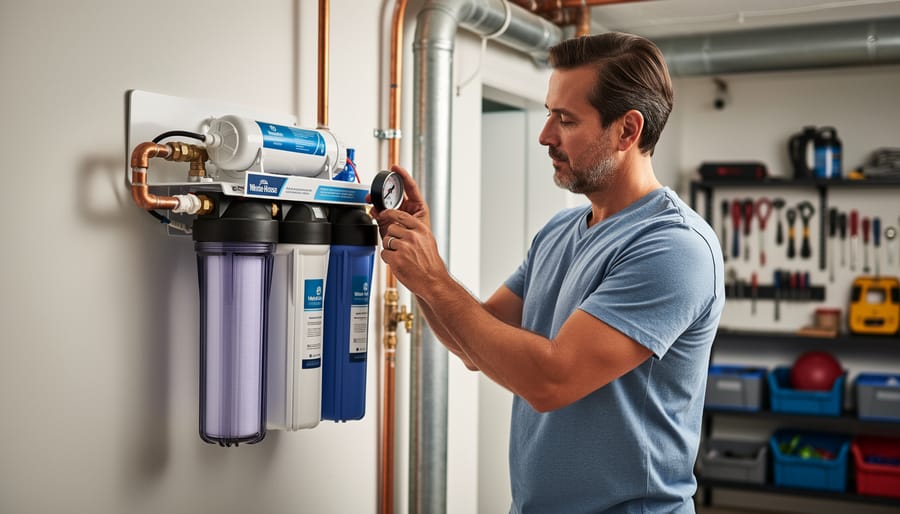
A quality whole-house water filter isn’t just about removing particles from your water, it’s about verified performance backed by independent testing. The difference between a system that actually protects your family and one that just looks impressive comes down to certification standards that prove what the filter can and cannot remove.
Three NSF/ANSI certifications form the backbone of reliable water filtration. NSF/ANSI 42 certification means the system reduces aesthetic issues like chlorine taste and odor, making your water more pleasant to drink and use. NSF/ANSI 53 certification tackles health concerns, verifying the system reduces contaminants including lead, cysts, and volatile organic compounds. NSF/ANSI 58 certification applies specifically to reverse osmosis systems, ensuring they remove a broader range of dissolved contaminants. Organizations like IAPMO and WQA independently test products against these standards, so when you see these certifications, you’re looking at verified performance rather than marketing claims.
Beyond certifications, quality systems maintain consistent flow rates without strangling your water pressure. A whole-house filter should handle your household’s peak demand, typically 10-15 gallons per minute for an average home, while still removing targeted contaminants. Check the NSF/ANSI certification listings to verify specific models meet the standards for contaminants in your water.
Filter lifespan matters as much as initial performance. Quality systems specify replacement intervals based on gallons processed or time periods, with clear indicators when filters need changing. A system certified for 100,000 gallons but installed in a home using 200 gallons daily requires attention every 16 months, not the vague “replace annually” guidance cheaper systems provide. Understanding these performance benchmarks helps you evaluate what you’re actually buying before comparing prices or features.
Key Factors to Consider Before Buying
Understanding Your Water Quality Needs
Start with a professional water test before shopping for any filtration system. You can request a detailed water quality report from Seattle Public Utilities, or hire a certified lab to test well water if you’re outside the city limits. Look for the contaminant levels measured in parts per million (ppm) or micrograms per liter (µg/L), and compare them against EPA maximum contaminant levels.
Seattle-area tap water typically contains chlorine for disinfection, which affects taste and odor but isn’t a health risk at municipal levels. You’ll also commonly find sediment from aging pipes, occasional lead from pre-1986 plumbing fixtures, and varying hardness minerals depending on your neighborhood’s water source. Homes near industrial zones or with older infrastructure may show elevated heavy metal readings.
Match your test results to the right filtration technology. Chlorine, taste and odor issues require systems certified to NSF/ANSI 42, which handles aesthetic impurities. If your test shows lead, mercury, or other health-hazard contaminants, you need NSF/ANSI 53 or 58 certification, these standards ensure the system actually reduces harmful substances to safe levels. Sediment filters work for particulate matter but won’t touch dissolved contaminants like lead or chlorine.
Don’t assume one filter handles everything. A test showing both sediment and lead means you’ll need at least a two-stage system: sediment pre-filter followed by a certified lead-reduction cartridge. Hard water requires a different approach entirely, often combining a water softener with filtration stages.
Sizing and Flow Rate Requirements
Calculating your household’s water demand starts with understanding how many people live in your home and which fixtures run simultaneously during peak usage times. Count the number of bathrooms, kitchen faucets, appliances like washing machines and dishwashers, and outdoor spigots. During morning and evening rushes, multiple fixtures operate at once, showers running while someone fills a coffee pot or the dishwasher starts.
A typical household needs a whole-house filtration system rated for 10-20 GPM to maintain adequate pressure throughout the home. To estimate your peak demand, add up the flow rates of fixtures likely to run together: a standard showerhead uses 2-2.5 GPM, a kitchen faucet around 1.5-2 GPM, and a washing machine about 3-4 GPM. If three people shower in the morning while the dishwasher runs, you’re looking at roughly 10-12 GPM minimum.
Undersizing causes frustrating pressure drops, weak showers, slow-filling toilets, appliances that struggle to operate properly. Check the system’s flow rate rating before buying, and choose one that exceeds your calculated peak by at least 20%. This buffer accounts for future needs and prevents performance issues as filters age and slightly restrict flow over their service life.
Installation and Space Considerations
Most whole-house water filtration systems install at the main water line entry point, typically in the basement, garage, or utility room where water enters your home. You’ll need adequate clearance for the system itself plus additional space for filter changes, plan for at least 2-3 feet of vertical clearance and 12-18 inches of width. Compact sediment and carbon filter systems require minimal space (often just 10-12 inches wide), while reverse osmosis whole-house systems and multi-stage units can occupy 2-3 feet of wall space and may need floor mounting.
Professional installation is strongly recommended for whole-house systems. The work involves cutting into your main water line, ensuring proper flow direction, installing bypass valves, and pressure testing, mistakes can lead to leaks, pressure drops, or system failure. Licensed plumbers have the tools and expertise to integrate the system correctly with your existing plumbing and hot water heater. While point-of-use filters under a single sink might be DIY-friendly, whole-house installations typically require permits and professional work to maintain plumbing warranties and ensure code compliance. Factor installation costs into your budget when comparing the $1,500-$4,500 initial system investment.
Types of Full Home Filtration Systems Compared
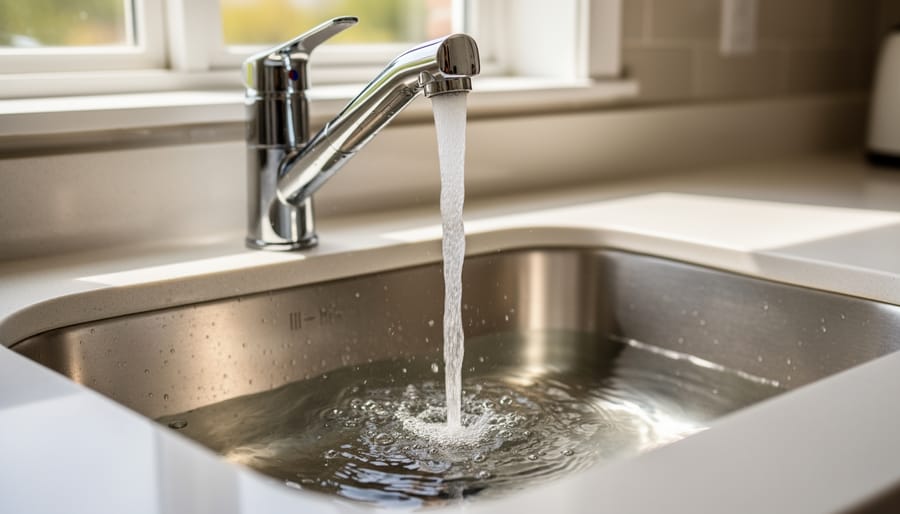
Understanding your filtration options starts with knowing what each system actually does. The right choice depends on your specific water quality issues, household size, and whether you need comprehensive purification or targeted contaminant removal.
Sediment Filters
These straightforward systems trap physical particles, dirt, rust, sand, and debris, before they enter your plumbing. A sediment filter uses mechanical filtration through pleated cartridges or spun polypropylene media, typically rated from 1 to 50 microns. They’re excellent first-stage protection for homes with visible sediment or well water containing particulates. However, sediment filters don’t address chemical contaminants, chlorine, or dissolved minerals. They work best as a pre-filter protecting downstream equipment or when paired with other filtration stages. Maintenance involves replacing cartridges every three to six months depending on sediment levels.
Carbon Filtration Systems
Activated carbon filters use adsorption to remove chlorine, volatile organic compounds, pesticides, and chemicals that affect taste and odor. Certified to NSF/ANSI 42 for aesthetic impurities, carbon systems improve drinking water quality noticeably. They come in two forms: granular activated carbon (GAC) and carbon block filters. Carbon blocks offer better contaminant contact time and more thorough filtration. These systems handle moderate flow rates well but require annual filter replacement. Carbon filters don’t remove dissolved minerals, heavy metals like lead (unless specifically certified to NSF/ANSI 53), or microorganisms.
Reverse Osmosis Whole-House Systems
RO systems force water through a semipermeable membrane, removing up to 99% of dissolved solids, heavy metals, fluoride, and many chemical contaminants. Certified to NSF/ANSI 58, they deliver the most comprehensive purification. The trade-off: RO systems reduce flow rates significantly, produce wastewater (typically three to four gallons wasted per gallon filtered), and require professional installation with adequate space for the membrane housing and storage tank. They’re ideal when water testing reveals lead, arsenic, or high total dissolved solids, but the lower flow rate and higher cost ($2,500, $5,500 installed) make them less common for whole-house applications.
UV Purification Systems
Ultraviolet systems use UV-C light to deactivate bacteria, viruses, and parasites without adding chemicals or affecting water chemistry. They’re particularly valuable for well water or homes concerned about microbiological contamination. UV systems require minimal maintenance, annual bulb replacement, and don’t reduce flow rate. The limitation: UV only addresses living organisms. It won’t remove chemicals, sediment, or dissolved minerals, so it’s typically paired with sediment and carbon pre-filters. The bulb must stay clean for effectiveness, which is why pre-filtration matters.
| System Type | Primary Contaminants Removed | Maintenance Frequency | Flow Rate Impact |
|---|---|---|---|
| Sediment Filter | Dirt, rust, sand, particles | 3-6 months | Minimal if sized correctly |
| Carbon Filter | Chlorine, VOCs, taste/odor issues | 12 months | Low to moderate |
| Reverse Osmosis | Lead, dissolved solids, fluoride, arsenic | 12-24 months (membrane) | Significant reduction |
| UV Purification | Bacteria, viruses, parasites | 12 months (bulb) | None |
| Multi-Stage Systems | Comprehensive (depends on stages) | Varies by component | Moderate |
Water Softener-Filter Combinations
These dual-purpose systems address both hard water minerals (calcium and magnesium) and filtration needs. The softener uses ion exchange to remove hardness, while integrated carbon or sediment filters handle contaminants. They’re practical for Seattle-area homes with moderate hardness and chlorine issues. The combined unit saves installation space but requires both salt replenishment for the softener and periodic filter changes. Cost runs $1,500, $3,500 installed.
Multi-Stage Systems
These integrate multiple technologies, typically sediment, carbon, and sometimes UV or additional specialty filters, into one housing. A common configuration: sediment pre-filter, dual carbon stages, and UV post-treatment. Multi-stage systems offer comprehensive protection certified to multiple NSF/ANSI standards (42, 53, sometimes 55 for UV). They balance broad contaminant removal with reasonable flow rates and moderate maintenance. Initial costs range from $1,800, $4,500, with maintenance involving staggered filter replacements throughout the year.
Our Recommendations for Seattle Homeowners
Based on Seattle’s specific water profile and common household needs, here are practical filtration recommendations that balance performance with your budget and existing plumbing setup.
For city water users dealing with chlorine taste and odor, the most frequent complaint among Seattle homeowners, a carbon-based whole-house system certified to NSF/ANSI 42 delivers excellent results without breaking the bank. Expect to invest $1,200, $2,200 for a quality activated carbon system that handles 10-15 GPM and maintains strong water pressure throughout your home. These systems excel at improving taste while protecting your hot water heater from sediment buildup.
Well water requires more robust filtration. A multi-stage system combining sediment pre-filtration, carbon filtration, and UV purification addresses bacteria, sediment, and organic compounds common in rural Seattle-area wells. Budget $3,200, $4,800 for a comprehensive setup certified to NSF/ANSI 53 for contaminant reduction and NSF/ANSI 55 for UV disinfection. The higher upfront cost pays off in fewer maintenance headaches and reliable protection against biological contaminants.
Hard water creates scale in pipes and reduces hot water heater efficiency. A combination water softener-filter system addresses both mineral content and contaminant removal. These dual-purpose units run $2,500, $4,500 installed but solve two problems simultaneously. Your water heater will thank you, and you’ll use less soap while enjoying softer water throughout the house.
Budget-conscious homeowners can start with a basic sediment-and-carbon system in the $800, $1,500 range. While these entry-level options won’t remove every contaminant, they significantly improve taste and reduce chlorine, sediment, and rust. Look for models certified to NSF/ANSI 42 at minimum, and verify the flow rate matches your household demand to prevent pressure drops during peak usage.
Premium whole-house reverse osmosis systems ($4,200, $5,500) deliver the most comprehensive filtration, removing up to 99% of dissolved solids, heavy metals, and chemical contaminants. These make sense for homes with confirmed lead concerns or compromised source water, but the higher cost and waste water production mean they’re overkill for typical Seattle city water. Most homeowners get better value from a targeted carbon-UV combination that addresses actual tested contaminants rather than paying for maximum removal capacity they don’t need.
Understanding Costs and Long-Term Value
Understanding the true cost of a whole-house water filtration system requires looking beyond the sticker price. While whole-house systems run $800, $5,500, that initial investment is just the starting point for calculating your total expense.
Initial system costs typically range from $1,500, $4,500, depending on the filtration technology and capacity you choose. A basic sediment and carbon system falls at the lower end, while multi-stage reverse osmosis or UV-integrated systems push toward the upper range. If you’re also addressing hard water, factor in water softener cost as an additional expense.
Installation adds another layer. Professional installation by a licensed plumber runs $500, $1,500, varying with system complexity and your home’s plumbing configuration. Tight crawl spaces or main line modifications increase labor time and cost.
Ongoing expenses matter more than many homeowners expect. Filter cartridges need replacement every 6-12 months, costing $50, $300 annually depending on your system type and water quality. Pre-filters require more frequent changes, while carbon and specialized media last longer. UV bulbs need annual replacement at $60-150 each. Reverse osmosis membranes last 2-3 years but cost $200-400 to replace.
Calculate your five-year ownership cost by adding initial system price, installation, and 60 months of filter replacements. A $2,500 system with $150 annual maintenance totals $3,250 over five years, or $54 monthly. Compare that against bottled water expenses or potential plumbing repairs from untreated water issues. The systems with the lowest upfront cost often carry higher long-term expenses through frequent filter changes or shorter component lifespans, making mid-range certified systems the better value for most Seattle households.
Common Mistakes to Avoid When Buying
The biggest mistake homeowners make is letting price drive the entire decision without verifying that a system meets NSF/ANSI standards. A bargain-priced filtration unit that isn’t certified by IAPMO or WQA to NSF/ANSI 42, 53, or 58 might not effectively reduce the contaminants you’re trying to remove, which defeats the entire purpose of installing a whole-house system. Spending $800 on an uncertified system that underperforms is far worse than investing $1,500, $4,500 in a certified one that actually protects your water quality.
Undersizing the system for your household’s flow rate creates pressure drops that affect every fixture, from showers to washing machines. Many homeowners skip professional water testing and guess at what contaminants they need to address, then wonder why the system doesn’t solve their specific issues. Without knowing whether you’re dealing with lead, chlorine, sediment, or hard water minerals, you can’t choose the right filtration technology.
- Ignoring NSF/ANSI certifications and buying based solely on marketing claims or price
- Choosing a system that doesn’t match your home’s GPM requirements, leading to reduced water pressure
- Overlooking the total cost of ownership, including filter replacements every 6-12 months
- Attempting DIY installation without understanding how it integrates with common pipe issues in older homes
- Skipping compatibility checks with your existing plumbing and water heater setup
Improper installation ranks among the top performance killers. If the system isn’t installed with proper shutoff valves, bypass loops, or pressure regulation, you risk future problems that require leak detection and costly repairs. Even a correctly specified system will fail to perform if it’s installed incorrectly or if you forget to account for ongoing maintenance. Budget for both the upfront system cost and the annual filter replacement expenses before committing to a purchase, and verify that any installer is licensed and familiar with integrating filtration into your home’s hot water system.
Installation and Professional Considerations
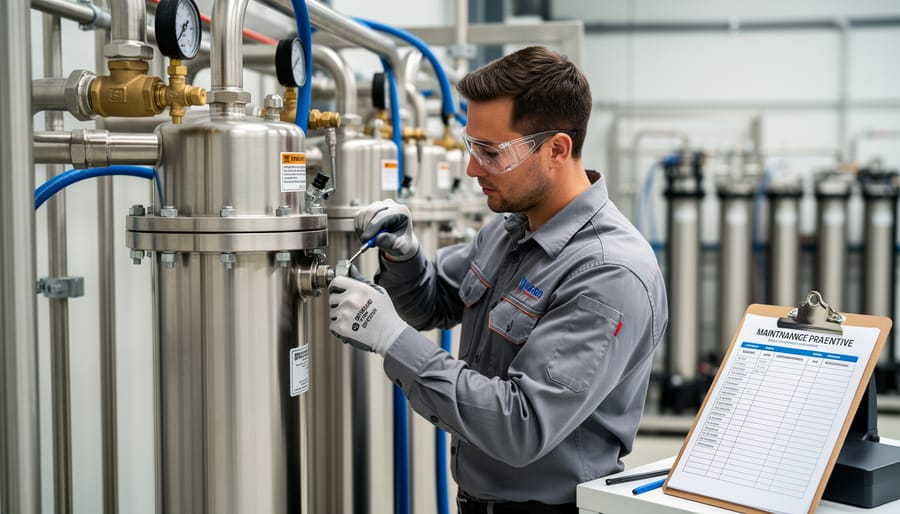
Full home water filtration systems require substantial plumbing modifications, making professional installation the safer choice for most homeowners. Licensed plumbers understand local building codes, can identify potential complications with your existing plumbing, and ensure the system integrates properly with your home’s infrastructure. DIY installation might seem cost-effective for the mechanically inclined, but mistakes can lead to leaks, reduced water pressure, or compromised filtration performance.
Professional installation typically includes a complete assessment of your plumbing layout, determining the optimal installation point (usually at the main water line entry), securing necessary permits, proper pipe cutting and fitting, pressure testing, and system calibration. Plumbers also handle hot water integration ensuring your water heater and filtration system work harmoniously without creating pressure imbalances or sediment buildup in heating elements.
Expect a typical installation to take four to eight hours for straightforward setups. More complex installations involving multiple stages, UV systems, or homes with challenging plumbing configurations may require a full day. Your plumber will need to shut off the main water supply during installation, so plan accordingly.
The installation location matters significantly. Systems need adequate space for the filtration unit and room to access filters during replacements. Plumbers evaluate whether your basement, utility room, or garage provides sufficient clearance and temperature control. They’ll also verify that the installation won’t restrict access to your water heater or other critical plumbing components.
Professional setup includes testing the system under operating pressure, checking for leaks at all connection points, verifying flow rates throughout the house, and confirming that pressure gauges read correctly. This thoroughness prevents the common DIY pitfall of discovering problems only after filters are already in place and water damage has occurred.
Frequently Asked Questions
How often do whole-house water filters need replacement?
Filter replacement frequency varies by system type and household water usage, but most sediment pre-filters need changing every 3-6 months, carbon filters every 6-12 months, and reverse osmosis membranes every 2-3 years. Your specific replacement schedule depends on water quality, daily usage volume, and the manufacturer’s specifications for your particular system.
Will a whole-house filtration system reduce my water pressure?
A properly sized system should not cause noticeable pressure loss. When you match the system’s flow rate capacity to your household demand (typically measured in gallons per minute), water pressure remains consistent throughout your home, though extremely high-capacity households may need larger systems or parallel filter housings.
What certifications should I look for when buying a water filtration system?
Look for systems certified to NSF/ANSI standards by independent organizations like IAPMO or WQA. NSF/ANSI 42 certification addresses taste and odor issues like chlorine, NSF/ANSI 53 covers health-related contaminants including lead, and NSF/ANSI 58 applies to reverse osmosis systems that reduce a broader range of dissolved solids.
Do I need professional water testing before choosing a filtration system?
Yes, testing your water first is essential for making an informed decision. Without knowing which specific contaminants are present in your water supply, you might purchase a system that doesn’t address your actual water quality issues or pay for filtration capabilities you don’t need.
Beyond these common questions, homeowners often wonder whether whole-house filtration affects their water heating equipment. The answer is yes, but in a positive way. By removing sediment, minerals, and other contaminants before water enters your plumbing system, these filters protect your water heater from scale buildup and corrosion that shortens tank life and reduces efficiency.
Another frequent concern is whether any system can remove all contaminants. No filtration system removes 100% of every possible contaminant, which is why matching your system to your specific water quality issues matters more than choosing the most expensive or comprehensive option. A carbon filter excels at removing chlorine and organic compounds but won’t address dissolved minerals, while reverse osmosis systems handle a wider range of contaminants but require more maintenance and generate wastewater during the filtration process.

Choosing the right full home water filtration system comes down to three critical decisions: understanding what’s actually in your water through professional testing, selecting a system with proper NSF/ANSI certifications for your specific contaminants, and ensuring expert installation that integrates seamlessly with your existing plumbing and hot water setup.
Don’t skip the water test. Without knowing whether you’re dealing with chlorine, lead, sediment, or hard water minerals, you’re guessing at solutions that may not address your actual problems. Look for systems certified to NSF/ANSI 42 for taste and odor issues, NSF/ANSI 53 for contaminant reduction including lead, or NSF/ANSI 58 for reverse osmosis applications. These certifications from IAPMO and WQA mean the system has been independently tested to perform as claimed.
While initial costs typically range from $1,500 to $4,500 for whole-house systems, factor in installation and long-term filter replacements when budgeting. Professional installation ensures proper sizing, maintains water pressure throughout your home, and protects your investment from common setup mistakes that reduce effectiveness.
Seattle Hot Plumbing specializes in integrating whole-home filtration with your hot water system for comprehensive water quality. Our team understands how filtration affects water heaters, can assess your specific needs, and provides expert installation that maximizes system performance. We’re available 24/7 to answer questions and schedule assessments, ensuring you get clean water without compromising the comfort and reliability you expect from your home’s plumbing.