 dominic
Replacing a water heater with professional installation typically costs between $1,800 and $4,500 in 2026, with the national average landing around $3,000. That total includes both the equipment and labor, though your final bill depends heavily on the type of unit you choose and the complexity of your installation.
Labor alone accounts for $500 to $1,500 of your total expense. Professional plumbers charge anywhere from $75 to $200 per hour depending on your location, and a straightforward tank-to-tank swap usually takes four to six hours. Tankless installations require significantly more time because they often involve reconfiguring gas lines, upgrading electrical panels, or reworking ventilation systems.
The biggest price drivers are unit type, fuel source, capacity, and whether your home needs modifications to accommodate the new heater. Switching from electric to gas, upgrading from a 40-gallon to an 80-gallon tank, or converting to a high-efficiency tankless system will push costs toward the higher end. Permit fees, old unit disposal, and emergency weekend service also add to the bottom line.
Most homeowners realize quickly that water heater replacement isn’t a DIY project. Gas connections require licensed professionals, electrical work needs permits, and building codes mandate specific venting standards. Professional installation protects your investment with proper warranties and ensures your system operates safely from day one. Understanding exactly what you’re paying for helps you budget accurately and avoid surprise expenses when your contractor presents the final invoice.
Average Water Heater Replacement Costs by Type
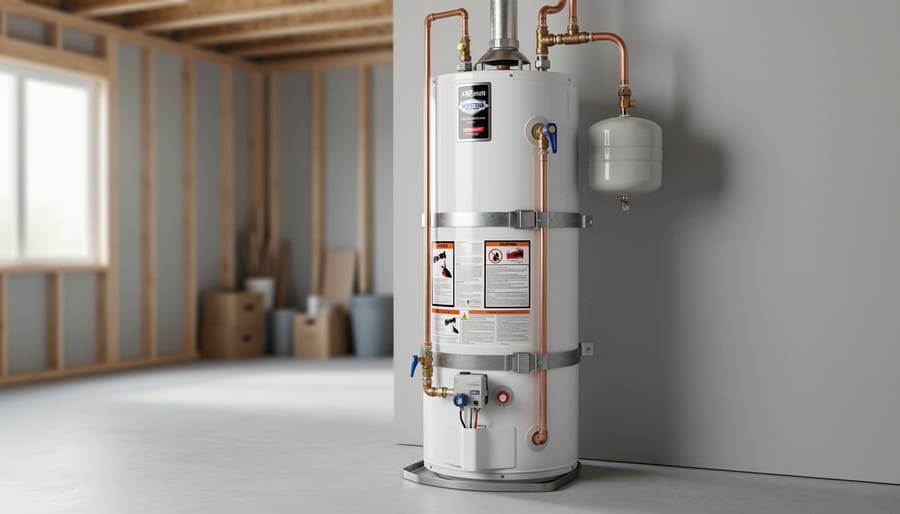
Replacement costs vary widely depending on which type of water heater you’re installing, but understanding these differences helps you budget accurately and choose the right system for your home and needs.
Conventional tank water heaters remain the most common choice for Seattle homeowners, and they’re typically the most affordable to replace. A standard 40-50 gallon gas tank water heater runs $800-$1,400 for the unit itself, with installation labor adding another $600-$1,200. Your total investment typically lands between $1,400-$2,600. Electric tank models cost slightly less upfront, expect $600-$1,200 for equipment and $500-$1,000 for labor, bringing your all-in cost to $1,100-$2,200. These figures assume a straightforward replacement where you’re swapping an existing tank for a similar model in the same location without major modifications.
| Water Heater Type | Equipment Cost | Labor Cost | Total Installed Cost |
|---|---|---|---|
| Gas Tank (40-50 gal) | $800-$1,400 | $600-$1,200 | $1,400-$2,600 |
| Electric Tank (40-50 gal) | $600-$1,200 | $500-$1,000 | $1,100-$2,200 |
| Gas Tankless | $1,200-$2,500 | $1,200-$2,800 | $2,400-$5,300 |
| Electric Tankless | $800-$1,800 | $800-$1,800 | $1,600-$3,600 |
| Heat Pump/Hybrid | $1,400-$2,800 | $800-$1,600 | $2,200-$4,400 |
Tankless water heaters represent a bigger upfront investment but deliver long-term energy savings. Gas tankless units cost $1,200-$2,500 for equipment, but installation is more complex and labor-intensive. You’ll pay $1,200-$2,800 for professional installation, especially if you need venting upgrades or gas line modifications. Total costs typically run $2,400-$5,300. Electric tankless models are somewhat more affordable at $800-$1,800 for the unit and $800-$1,800 for installation work, putting your total investment around $1,600-$3,600. Installation complexity depends heavily on your home’s electrical capacity, many Seattle homes need panel upgrades to support the high amperage demands of whole-house electric tankless systems.
Heat pump and hybrid water heaters offer exceptional efficiency, particularly in Seattle’s mild climate. Equipment costs range from $1,400-$2,800, with labor running $800-$1,600 for most installations. Your total cost falls between $2,200-$4,400. These units work best in conditioned spaces like basements or garages where they can draw heat from surrounding air. Installation is generally less complex than tankless, but they require adequate clearance and proper drainage for condensate removal.
These Seattle-area prices reflect standard installations by licensed professionals in 2026. Your actual costs may run higher if you’re converting fuel types, upgrading venting systems, bringing older installations up to current code, or dealing with challenging access in tight spaces.
Labor Cost Breakdown: What You’re Actually Paying For
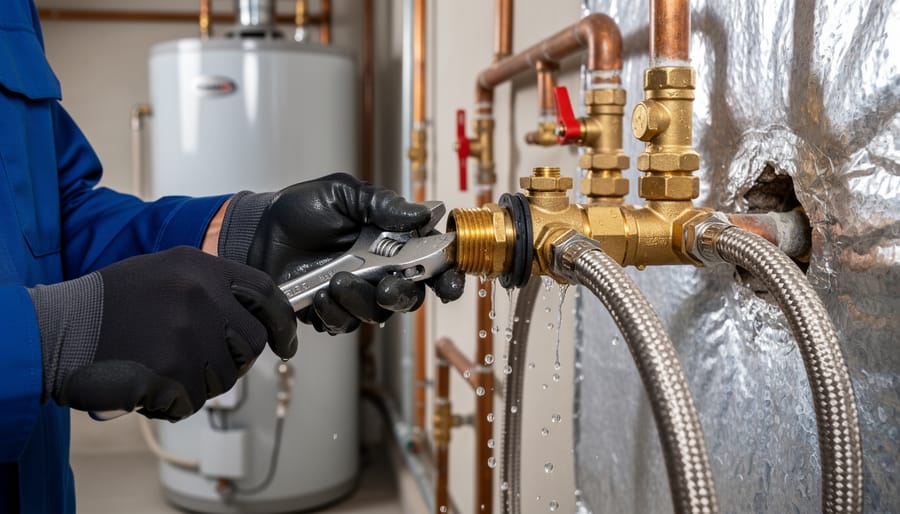
Professional water heater installation in the Seattle area typically costs between $450 and $1,200 for labor alone, depending on the complexity of your specific situation. That price covers far more than simply swapping one unit for another, you’re paying for expertise, code compliance, and the assurance that your new water heater will operate safely and efficiently for years to come.
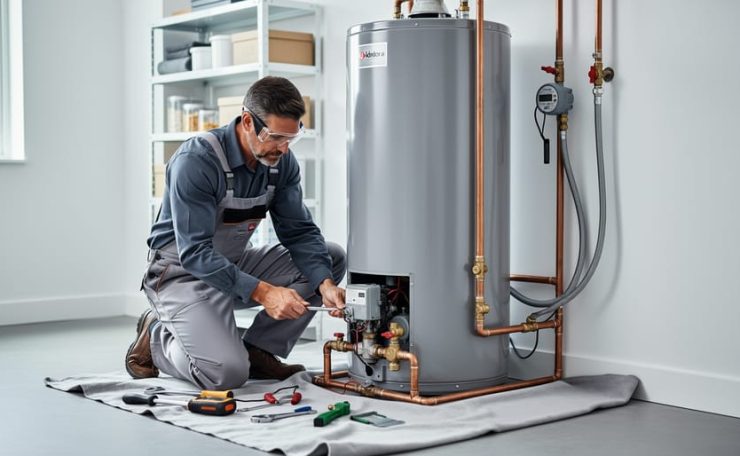
When you hire a licensed plumber for water heater replacement, your labor dollars cover a complete sequence of specialized tasks:
- Safe disconnection and removal of your existing water heater, including draining the tank and disconnecting water, gas, or electrical lines
- Proper disposal or recycling of the old unit according to local regulations
- Site preparation and any necessary modifications to accommodate the new water heater’s dimensions or requirements
- Installation of new water supply connections with updated shutoff valves and flex lines
- Gas line connection and pressure testing for gas models, or electrical wiring and breaker installation for electric units
- Venting system installation or modification to meet current code requirements
- Required safety components like temperature and pressure relief valves, expansion tanks, and drain pans
- Permit acquisition and scheduling required inspections with local building authorities
- System testing, leak checks, and verification of proper operation before the technician leaves
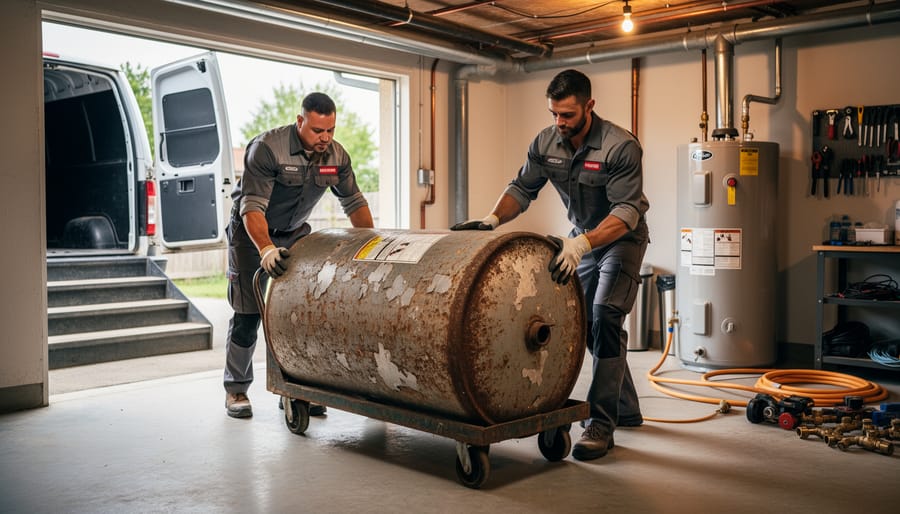
The removal and disposal process alone takes 30 to 60 minutes for a straightforward replacement. Your plumber must safely drain the old tank, which can hold 40 to 80 gallons of water, disconnect utility lines without damaging surrounding pipes or fixtures, and maneuver a 100- to 150-pound unit out of your home.
Installation preparation often reveals code violations or outdated components from your previous installation. Seattle building codes have evolved significantly over the past decade, and bringing your system up to current standards protects your home and ensures your installation passes inspection. This might include adding an expansion tank to prevent pressure buildup, installing earthquake straps in seismic zones, or upgrading venting materials from single-wall to double-wall pipe.
The connection phase demands precision and experience. Gas connections require leak testing at multiple pressure levels. Electrical work must match your water heater’s voltage and amperage requirements exactly. Water line connections need proper sealing and pressure testing to prevent leaks that could cause thousands in water damage.
Testing and final inspection verify everything functions correctly, proper flame ignition for gas models, correct thermostat operation, adequate venting draft, and no leaks anywhere in the system. This quality assurance step gives you confidence your investment will deliver reliable hot water when you need it.
Factors That Influence Your Total Replacement Cost
Installation Complexity and Location
Where your water heater lives significantly impacts replacement costs. A basement installation with clear access and adequate headroom typically represents the low end of labor costs, contractors can maneuver equipment easily and work efficiently. Expect to pay standard labor rates for straightforward basement replacements.
Attic installations, however, can increase labor costs by 25-40%. Technicians must haul heavy equipment up stairs or ladders, work in cramped spaces with limited mobility, and often contend with inadequate lighting and ventilation. The physical challenge alone extends installation time substantially.
Tight closet installations present similar challenges. If your water heater sits in a narrow hallway closet or utility space with minimal clearance, contractors need extra time to remove the old unit and maneuver the new one into position. You may face additional costs if doorways need temporary modification or if the unit must be carried through living spaces requiring floor protection.
Garage installations generally fall between basement and attic pricing, depending on proximity to utility connections. The key factor is distance from gas lines, electrical panels, and water mains, longer runs mean more materials and labor hours.
Accessibility issues compound quickly. A unit in a finished basement behind drywall, or one requiring removal of built-in cabinetry, adds demolition and restoration costs. When planning for whole-home comfort factor in an extra $200-600 for challenging installations beyond standard setups.
Fuel Type and Infrastructure Changes
Switching fuel types during water heater replacement adds significant costs beyond the basic installation. Converting from gas to electric typically requires upgrading your electrical panel and running a new 240-volt circuit, which can add $800 to $2,500 to your project depending on panel capacity and distance from the installation site. Seattle homes with older 100-amp panels may need a complete panel upgrade costing $1,500 to $3,000.
Converting from electric to gas involves running new gas lines and installing proper venting, adding $1,200 to $3,500 to your replacement cost. Gas line installation alone runs $500 to $2,000 depending on distance from your existing gas meter, while venting through walls or roofs adds another $700 to $1,500. You’ll also need city permits for gas work, typically $150 to $300 in the Seattle area.
Most homeowners stick with their existing fuel type to avoid these infrastructure costs. However, fuel conversion makes sense when motivated by long-term energy savings, fuel availability changes, or major home renovations that already involve electrical or gas work.
Code Compliance and Permit Fees
Seattle building codes require permits for water heater replacement, typically costing $150-$300. These permits ensure work meets safety standards and trigger mandatory inspections. Your installation may require additional components to pass inspection: expansion tanks ($150-$300 installed) prevent pressure buildup in closed plumbing systems, while seismic strapping ($50-$100) secures units against earthquake movement, critical in our region. Older homes often need upgrades to electrical panels, gas lines, or underground plumbing to meet current code, adding $200-$800. Venting systems for gas units must comply with clearance and material specifications. Licensed contractors handle permitting and know local requirements, but budget an extra $400-$1,200 for compliance-related work beyond basic installation.
DIY vs. Professional Installation: Cost Trade-offs and Considerations
The allure of DIY water heater replacement centers on one number: you’ll save $500, $1,200 by skipping labor costs. But that upfront savings can evaporate quickly when you factor in tool rentals ($50, $150), permit fees ($100, $300 in Seattle), potential code violations, and the very real risk of flooding, gas leaks, or electrical hazards. If something goes wrong during installation, you’re not just facing repair your hot water system costs, you could be looking at thousands in water damage, insurance complications, or invalidated warranties.
Pros of DIY Installation
- Saves $500, $1,200 in professional labor costs for straightforward replacements.
- Complete control over timing and pace of the project.
- Potential learning experience for mechanically-inclined homeowners.
Cons of DIY Installation
- Gas line errors or improper venting can create carbon monoxide hazards.
- Manufacturer warranties often require licensed installation to remain valid.
- Code violations discovered during home sale inspections can force costly corrections.
- Tool investment and permit navigation add hidden time and expense.
- No liability protection if installation causes property damage or injury.
Seattle building codes require permits for water heater replacement, and inspectors expect work that meets current electrical, plumbing, and venting standards, not just what was grandfathered in decades ago. A licensed professional knows when you need an expansion tank, proper seismic strapping, or upgraded venting, and their work comes with insurance coverage if something fails.
DIY becomes particularly risky when converting fuel types (electric to gas requires gas line installation), working with tankless units (precise venting and gas pressure requirements), or dealing with confined spaces where one wrong connection means flooding a finished basement. Even experienced homeowners often underestimate the time investment: what a pro completes in three to four hours can stretch into a full weekend or longer for someone tackling it the first time.
Consider professional installation essential when: you’re converting fuel types, installing tankless or heat pump models, your home lacks proper venting infrastructure, or local code requires licensed work. The $500, $1,200 labor cost buys expertise, proper permitting, warranty protection, and peace of mind that your family’s safety isn’t riding on a YouTube tutorial.
Additional Costs to Budget For
Your base replacement quote covers the new water heater and standard installation labor, but several add-ons can push your final bill higher. Planning for these extras upfront prevents surprise invoices when when to call a pro for your replacement.
- Expansion tank installation: $150, $350, required by Seattle code for closed-loop systems to prevent pressure buildup
- Upgraded venting system: $300, $800 for proper exhaust routing, especially when switching to high-efficiency or tankless models
- Pipe modifications: $200, $600 to adapt existing water lines to new unit connections or correct poor original plumbing
- Electrical panel upgrade: $500, $2,000 if your current service can’t support a new electric or hybrid heat pump model
- Gas line extension or modification: $250, $700 when relocating units or upgrading to larger BTU requirements
- Earthquake strapping: $50, $150, mandatory in Seattle to secure the tank against seismic activity
- Pressure relief valve and drain pan: $100, $200 for code-compliant safety components not always included in base quotes
- Water softener integration: $800, $2,500 if you’re adding treatment to protect your new investment from hard water damage
- Extended warranty coverage: $150, $400 beyond manufacturer warranties, covering parts and labor for 5-10 years
Disposal fees for your old unit typically run $50, $100, though many contractors include this in their labor quote. If your replacement requires drywall patching, painting, or carpentry to access tight spaces, budget another $200, $500 for finishing work. Emergency shutoff valves meeting current code standards add $75, $150 per connection point but provide crucial protection against leaks. Seattle permits themselves cost $150, $300 depending on work scope, and inspection fees may apply for complex installations involving fuel conversions or major electrical upgrades. Ask your contractor for an itemized quote listing each potential add-on so you understand exactly what drives your total investment beyond the advertised base price.
How to Get Accurate Quotes and Save Money

Getting accurate water heater replacement quotes from Seattle contractors starts with preparation and knowing what questions to ask. A proper estimate should break down equipment costs separately from labor, specify the exact model being installed, and detail any additional work like code upgrades or venting modifications. Request at least three written quotes to establish a realistic price range for your specific situation.
- Contact three to five licensed plumbers and request on-site assessments rather than phone estimates. In-person evaluations catch installation challenges that affect final costs.
- Ask each contractor to itemize equipment, labor, permit fees, removal of your old unit, and any code-required upgrades like expansion tanks or seismic strapping.
- Verify licensing, insurance coverage, and warranty terms. A reputable contractor provides both manufacturer warranty on the unit and labor warranty on installation work.
- Compare quotes based on total value, not just bottom-line price. The lowest bid often excludes necessary work or uses inferior equipment.
- Inquire about rebates for high-efficiency models. Seattle City Light and Puget Sound Energy offer incentives that can offset 10-15% of equipment costs for qualifying tankless or heat pump water heaters.
Strategic timing can reduce costs significantly. Schedule replacements during off-peak months (late spring or early fall) when contractors have more availability and may offer better rates than during winter emergency calls. If your current water heater still functions but shows age, replacing it proactively avoids premium charges for emergency weekend or after-hours service.
Watch for red flags in estimates: vague line items, no permit mentioned when code requires one, pressure to decide immediately, or prices dramatically below other quotes. Legitimate contractors explain their pricing transparently and provide references from recent jobs. Quality installation by experienced professionals ensures your investment in efficient heating delivers reliable performance for years.
Frequently Asked Questions
Homeowners considering water heater replacement often have specific questions about the process, costs, and logistics. Here are answers to the most common concerns we hear from Seattle-area customers.
How long does a typical water heater replacement take?
Most standard water heater replacements take 3-5 hours for a like-for-like swap. If you’re changing fuel types, upgrading to tankless, or need code compliance work, plan for 6-8 hours or potentially a full day.
Is removal and disposal of my old water heater included in the labor cost?
Yes, reputable contractors include old unit removal and disposal in their labor quotes. Confirm this upfront, as some low-ball estimates exclude disposal to appear cheaper.
Do I need a permit for water heater replacement in Seattle?
Yes, Seattle requires permits for water heater replacements to ensure code compliance and safety. Licensed contractors typically handle the permit process as part of their service, with permit fees ranging from $150-$300.
What payment options are available for water heater replacement?
Most plumbing companies accept multiple payment methods including credit cards, checks, and financing plans. For larger investments like tankless systems, ask about financing options that can spread costs over 12-60 months.
Does my water heater warranty cover the labor costs?
Manufacturer warranties typically cover equipment defects but not labor. You’ll need separate labor coverage through extended warranties or service plans, which usually cost $100-$300 annually.
When should I pay for emergency replacement versus waiting for scheduled service?
If your water heater is actively leaking, creating safety hazards, or has completely failed, emergency replacement prevents water damage that could cost thousands more. For units showing early warning signs, scheduled replacement costs less and lets you research options.
These answers reflect typical scenarios for Seattle homeowners, but your specific situation may vary. When you contact contractors for quotes, bring up any unique concerns about your home’s layout, existing infrastructure, or timeline needs. The right professional will answer all your questions thoroughly before starting work.
Understanding the full cost of water heater replacement with labor helps you budget confidently for this essential home investment. Most Seattle homeowners in 2026 should expect to invest between $1,800 and $4,500 for a complete replacement, with the exact figure depending on your chosen system type, installation complexity, and any necessary code upgrades.
While the upfront cost might seem substantial, professional installation delivers value that extends far beyond the installation day. Licensed technicians ensure your new water heater operates safely, efficiently, and reliably for its entire lifespan, typically 10 to 15 years for conventional tanks and 20-plus years for quality tankless systems. Proper installation prevents costly callbacks, premature failures, and the safety hazards that DIY mistakes can create.
Investing in expert installation also protects your manufacturer’s warranty, ensures local code compliance, and gives you the peace of mind that comes from knowing your family has dependable hot water when they need it.
Seattle Hot Plumbing offers transparent pricing, accurate quotes, and 24/7 emergency service when your water heater fails unexpectedly. Our experienced technicians handle everything from straightforward tank replacements to complex fuel conversions and high-efficiency upgrades. Contact us today for a detailed estimate tailored to your home’s specific needs and your budget.