 dominic
Water heater thermostat replacement cost depends on a few moving parts, and the first thing to know is that I can’t give you a verified thermostat-only price here. What I can give you is the real baseline: a full water heater replacement runs about $1,200 to $4,500 in 2026, with most homeowners paying between $882 and $1,826 for a tank unit, and a standard 40-gallon replacement commonly landing at $1,650 to $1,900. Labor alone typically falls between $150 and $500. That’s the ceiling you’re weighing a thermostat repair against.
So what moves the price? The type of heater (electric tank, gas, or tankless), how many thermostats it has, how easy the unit is to reach, local labor rates, and whether the thermostat is the real culprit at all. A tripped limit switch or a failed heating element can mimic a bad thermostat, and misdiagnosing it costs time and money.
Safety matters here too. Electric units carry live voltage, and gas units add combustion and venting concerns. If you’re sitting with no hot water right now, we’re available 24/7, and the sections below will help you decide between DIY and a professional repair.
What You’ll Pay for a Water Heater Thermostat Replacement: Cost by Heater Type
Electric Water Heater Thermostats
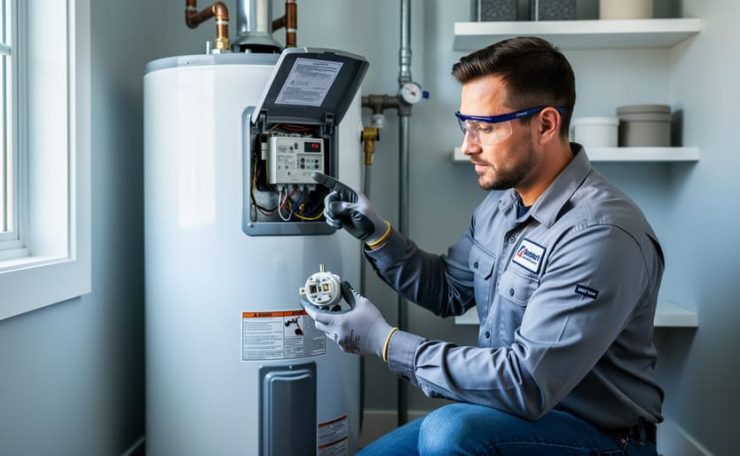
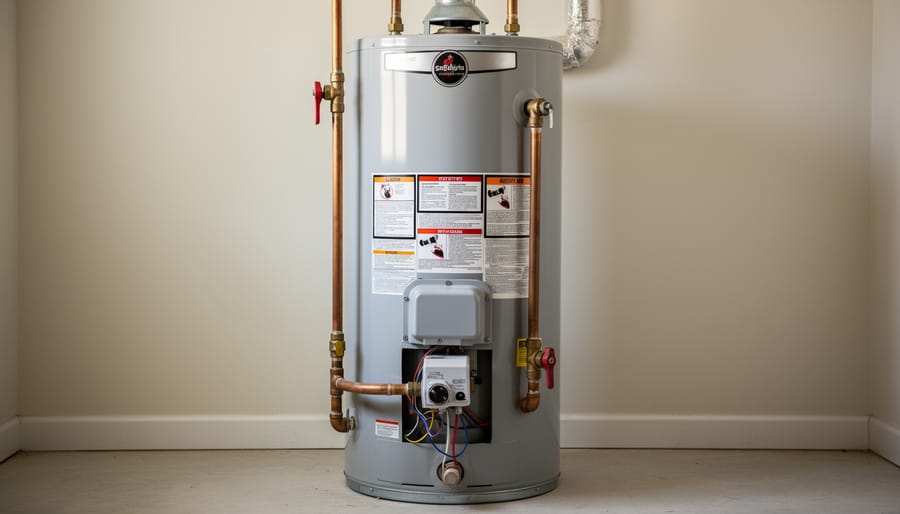
Most electric tank heaters have two thermostats: an upper one that controls the top heating element and a lower one that handles the bottom. Because they work as a pair, either can wear out on its own, and sometimes both need replacing at once. A failing thermostat can leave you with lukewarm water, scalding water, or none at all.
In relative terms, this is usually the most affordable thermostat repair. Electric thermostats are simple parts, and swapping them is quick work for a licensed plumber. We can’t give you an exact figure without seeing your unit, so request a written quote, and ask whether replacing both thermostats makes sense while the access panels are open.
Gas Water Heater Thermostats and Control Valves
Gas water heaters don’t have a separate thermostat the way electric models do. Instead, the thermostat is built into the gas control valve, a single unit that senses water temperature and also regulates the gas flowing to the burner. Because that part controls fuel and the pilot or ignition system, a mistake can mean a gas leak or unsafe combustion, so this repair deserves extra care.
That added complexity is why a gas control valve generally costs more than an electric thermostat, both for the part and for the skilled labor to install and test it safely. We’d recommend a licensed plumber handle it.
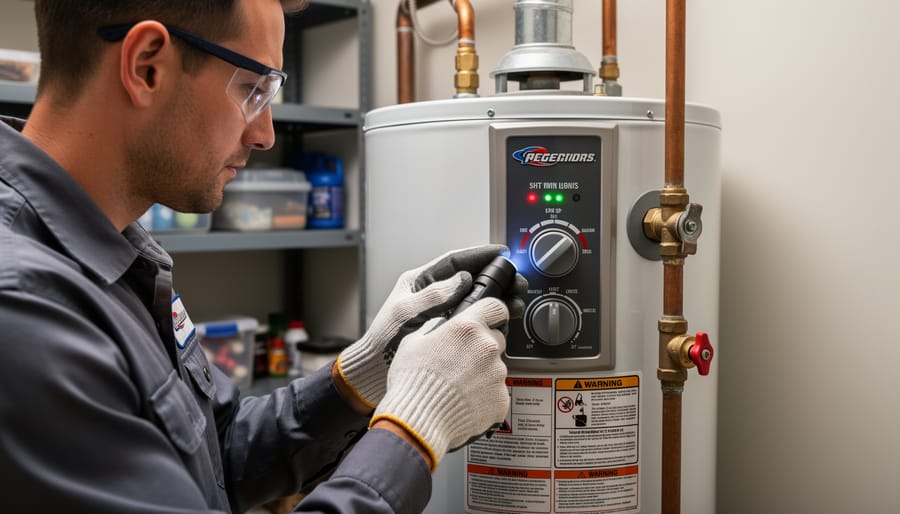
Where the Money Goes: Parts, Labor, and Extras in a Thermostat Repair
A thermostat repair bill is easier to understand once you see how it’s built. Most quotes break down into a few predictable pieces, and knowing them helps you spot a fair estimate.
Here’s what typically shows up on a thermostat repair quote:
- The replacement thermostat or gas control valve itself, which varies by heater type and brand.
- Labor for removing the old part and installing and testing the new one.
- A diagnostic fee or service call charge to confirm the thermostat is really the problem.
- Additional parts, such as heating elements or valves, if they’ve failed too.
- Any code-required safety work, like correcting wiring or venting issues found along the way.
The part is usually the smaller piece of the total. Labor tends to drive the bill, and the best way to understand how plumbers price their time is to look at full-unit work. Tank swap labor generally runs $150 to $500, and professional basic installations often land between $800 and $1,500 once the unit is included. Those are replacement figures, not thermostat prices, so a thermostat repair should come in well under them. They simply show how much of a plumber’s price is skilled labor, which is why it pays to understand labor costs for installs when you compare quotes.
Service call fees vary quite a bit from one company to the next, so ask about them upfront. A good plumber will tell you whether the diagnostic fee is separate or credited toward the repair if you move forward.
Add-ons are where surprises happen. If the thermostat failed because a heating element is burned out or a valve is worn, fixing only one part won’t solve your hot water problem. Ask for a written, itemized quote so you know exactly what’s included before any work begins.
What Changes the Price of a Thermostat Replacement
Not every thermostat job is priced the same, and a few variables explain most of the gap between quotes. The biggest one is the type of heater. Gas control valves generally cost more than electric thermostats, and tankless units usually need a different control or sensor repair altogether. Brand matters too, since parts for common models are easy to find, while older or less common units can mean a special order and a longer wait.
Accessibility comes next. A heater in an open utility closet is quick to service, but one tucked in a tight crawlspace or a cramped basement corner takes more time, and time is what labor charges are built on. Age and overall condition also play a part. If the tank is rusty or the wiring looks tired, a plumber may recommend fixing more than the thermostat, such as a failing heating element, and each added part raises the bill.
Timing and location affect the total as well. Emergency or after-hours calls often cost more than a scheduled visit, and local labor rates vary from one area to the next. Service call fees differ by company, so ask about them upfront.
The same factors that move full replacement quotes apply here in a smaller way. Those quotes range from $1,200 to $4,500, shaped by location, the company you hire, job complexity, and any plumbing or electrical upgrades. Labor alone usually runs $150 to $500 on a tank swap. A thermostat repair is far smaller, but the logic carries over, so ask for a written quote that spells out the part, the labor, and anything extra.
Is It the Thermostat? Signs to Check Before You Call
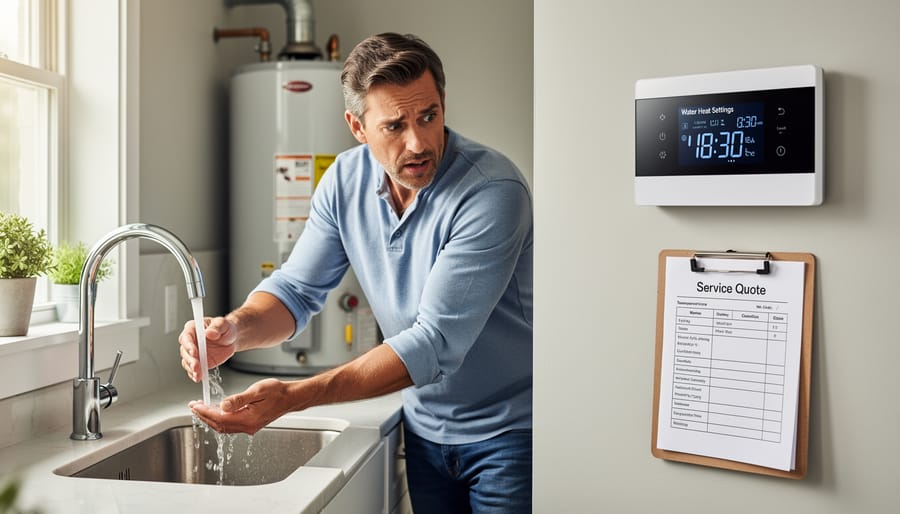
Not every cold shower points to a bad thermostat. A failing one usually shows up as water that’s scalding or lukewarm, temperatures that swing from one shower to the next, no hot water at all, or a breaker that keeps tripping. The catch is that heating elements, sediment buildup, and a tripped high-limit switch can cause nearly identical symptoms. That’s why it pays to check a few things before you spend money on a part you may not need.
Here’s a simple, safe checklist to run through before you call:
- Check the breaker (electric) or the pilot light (gas). A tripped breaker or a pilot that’s gone out is often the whole problem.
- Confirm the temperature setting. Make sure the dial hasn’t been bumped too low or turned off.
- If your unit has a high-limit reset button, press it once. If it trips again right away, stop and leave it alone.
- Write down what you’re seeing: how long it’s been happening, whether the water runs hot then cold, and any strange noises.
- Find the make and model number on the heater’s label, then call a licensed plumber.
Skip anything that means opening panels on an electric unit or touching gas components. Those are jobs for a pro, and our repair steps guide explains what’s safe for homeowners and what isn’t.
A professional diagnosis can save you from paying for the wrong part. Swapping a thermostat won’t fix a worn heating element or a tank full of sediment, and guessing gets expensive fast.
DIY vs. Hiring a Professional for Thermostat Replacement
Doing it yourself looks tempting because labor is the one cost you can actually control. Professional labor on a water heater job usually falls between $150 and $500, so skipping it can trim the bill. But a thermostat sits right next to the parts that can hurt you, which makes the savings worth weighing carefully.
Pros
- You keep the labor charge, which is often the biggest slice of a small repair.
- A confident DIYer with the right tools can finish quickly, sometimes the same afternoon.
- You control the timing instead of waiting on a technician’s schedule.
Cons
- Electric models carry live high-voltage power, and a mistake can cause serious shock.
- Gas models involve gas lines and combustion, where a poor connection can mean a leak.
- Incorrect installation or code issues can void your warranty and create bigger repairs later.
- You might replace the wrong part if the real culprit is a heating element or a tripped high-limit switch.
- One costly mistake can wipe out whatever you saved on labor.
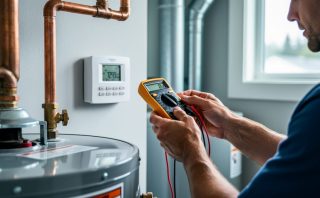
Electric heaters are the more approachable of the two, but only if you’re comfortable working with household wiring. That means shutting off the breaker, confirming the power is truly dead with a voltage tester, and never trusting a switch alone. If any of that makes you hesitant, that’s a good sign to hand it off. There’s no shame in it, and no repair is worth a trip to the emergency room.
Gas water heaters are a different story. The thermostat is built into the gas control valve, so replacing it means disconnecting and reconnecting a gas supply and getting the pilot and burner working safely again. We strongly recommend leaving this one to a licensed plumber. A small error here isn’t just an inconvenience, it’s a safety hazard for your whole household.
A professional also brings something a parts store can’t: a proper diagnosis. Because several different problems mimic a bad thermostat, a pro helps you avoid paying for a part you never needed. They’ll also make sure the work meets local code and doesn’t put your warranty at risk. If your heater is acting up, we’re happy to take a look anytime, day or night.
Repair or Replace? When a New Water Heater Makes More Sense
A thermostat swap makes sense when the rest of the heater is in good shape. If the tank is sound and the unit isn’t too old, a repair is usually the smarter spend. But a new thermostat can’t fix a tired water heater, and that’s where the decision gets interesting.
Start with age. Most tank models wear out somewhere in the 8 to 12 year range, and if yours is nearing that window, it’s worth reading up on water heater lifespan before you pay for another repair. Replacement starts to look better when you see repeated failures, rust around the base or fittings, water pooling beneath the tank, or rusty-looking hot water. Leaks and corrosion inside the tank can’t be repaired, only replaced.
Here’s the cost picture. A full water heater replacement cost typically runs $1,200 to $4,500 in 2026, with most homeowners paying between $882 and $1,826. If a thermostat repair is a fraction of that and the heater is otherwise healthy, repairing it is a sound choice. If you’re facing a second or third repair on an aging unit, putting that money toward a new heater often saves you more in the end.
If you do replace, consider high-efficiency or tankless models. They cost more upfront, but they use less energy over time, which can trim your utility bills and reduce your household’s environmental footprint. Your plumber can walk you through which option fits your home and budget, with no pressure to buy.
Frequently Asked Questions About Thermostat Replacement Costs
Here are quick answers to the questions homeowners ask us most about thermostat repairs.
Can I replace just one thermostat on an electric water heater?
Yes. Electric tanks typically have an upper and a lower thermostat, and if only one has failed, a plumber can usually swap just that one. Many pros will test both while they’re there, since the other may not be far behind.
How long does a thermostat replacement take?
It’s generally a fairly short job for a licensed plumber, though gas control valves and hard-to-reach units can take longer. Ask for a time estimate in your written quote.
Is a thermostat repair covered by warranty?
It depends on your heater’s age and the manufacturer’s terms. Many warranties cover parts but not labor, so check your paperwork or ask your plumber to confirm before work begins.
Why is my new thermostat still not heating properly?
The thermostat may not have been the real culprit. Failed heating elements, sediment buildup, or a tripped high-limit switch can cause the same symptoms, which is why a proper diagnosis matters.
Is it worth repairing an older water heater?
Often, yes, if the tank is sound and this is the first issue. If the unit is near the end of its life, leaking, or rusting, putting that money toward a full replacement (typically $1,200 to $4,500) may serve you better.
Is a thermostat problem an emergency?
Not always, but treat it seriously. Water that’s scalding hot is a safety risk, and no hot water at all is a hassle you shouldn’t have to live with. If you notice gas smells, leaks, or a tripping breaker, shut off power or gas and call a pro right away.
If your situation doesn’t quite fit any of these, a quick call to a licensed plumber can usually point you in the right direction without any pressure.
A thermostat replacement is usually a much smaller expense than swapping the whole unit. A full tank water heater replacement typically runs $1,200 to $4,500, so a targeted repair can save you real money when the heater is otherwise in good shape.
The final bill comes down to a few things: your heater type (electric or gas), the part itself, labor, how easy the unit is to reach, and whether after-hours service is involved. Because those details vary from home to home, ask for a clear written quote before any work begins, so you know exactly what you’re paying for.
Please keep safety in mind, too. Electric heaters carry live high-voltage power, and gas models involve gas lines and combustion. If you’re not completely comfortable with that, a licensed plumber is the safer choice.
If your hot water is acting up, we’re happy to help. Seattle Hot Plumbing is available 24/7 for hot water emergencies, and we’ll walk you through your options, whether that’s a simple thermostat fix or a conversation about something more.